
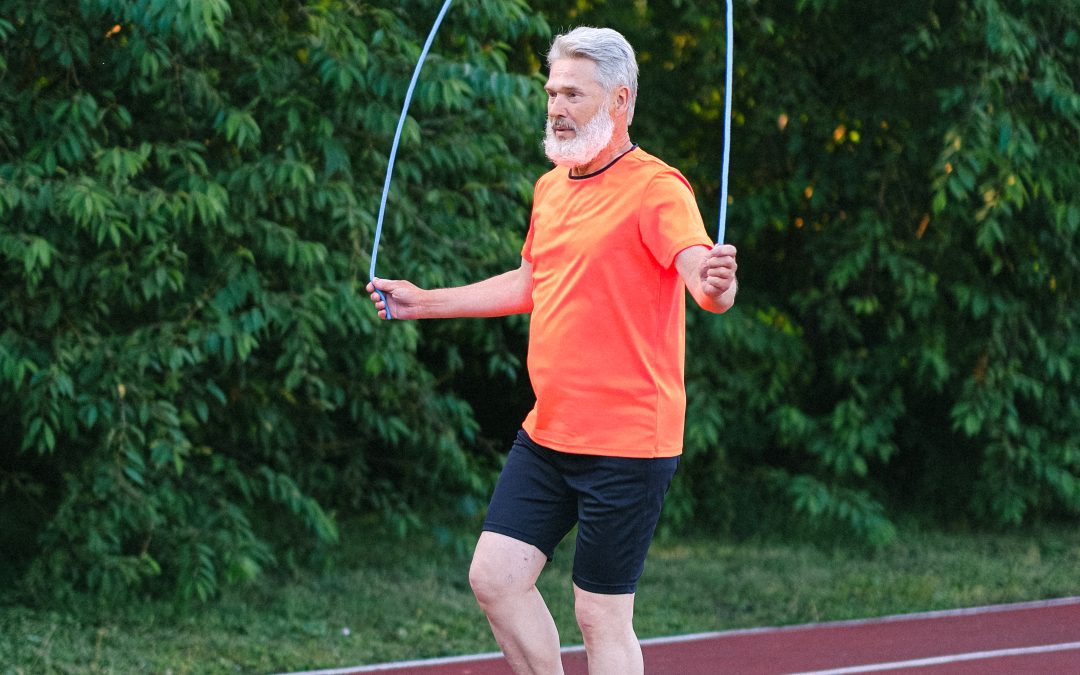
I know the answer to this question but what do you think?
Yes absolutely!
Older adults can absolutely benefit from incorporating some form of jumping or impact-based movement into their exercise routine, if it is appropriate for you current fitness level, balance, joints, and medical history.
I am following on from my previous newsletter and blog regards to stop moving like an old person. This is one of the things that at some point you made a decision you didn’t need to do this anymore. As mentioned above it may be due to medical history or a reason where you have been advised not to. However, if that isn’t the reason it’s maybe time to consider it.
Jumping exercises can help improve:
- Bone strength and bone density
- Balance and reaction time
- Leg strength and power
- Coordination
- Confidence with movement
- Fall prevention (through faster muscle response)
As we age, we naturally lose muscle power faster than strength, and power is what helps you:
- catch yourself if you trip
- get up stairs easier
- stand up quicker
- get out of a chair quicker
- move more confidently
Even small amounts of safe impact training can help maintain this.
Now I am not saying find something nice and high and jump from it, “jumping” for older adults does not need to mean high box jumps or explosive workouts. It can be very gentle and progressive.
Examples of low-level jump or impact exercises
- Heel drops
- Small hops while holding a chair
- Marching with quicker foot contacts
- Skipping movements
- Step hops onto a low step
- Light pogo jumps
- Fast sit-to-stands
- Mini squat jumps
Power declines faster than strength with age, which is why small explosive movements can be so valuable.
Safety first
Jump exercises should always be:
- progressive
- low volume to start
- well supervised if needed
- matched to the individual’s mobility and balance
Some people may need modified versions or should seek medical advice first, particularly if they have:
- severe osteoporosis
- significant arthritis
- recent surgery or fractures
- poor balance
- uncontrolled pain
For those individuals, “power training” can still be achieved through faster strength movements without leaving the ground.
A sensible progression
Before adding jumps, older adults should generally be able to:
- stand from a chair comfortably
- squat safely
- balance with confidence
- walk steadily
- tolerate basic strength exercises
When introduced gradually, low-level jumping and impact work can be an excellent way to help older adults stay strong, mobile, and independent for longer.
When I add in ‘jumping’ options to moves maybe think about giving it a go.